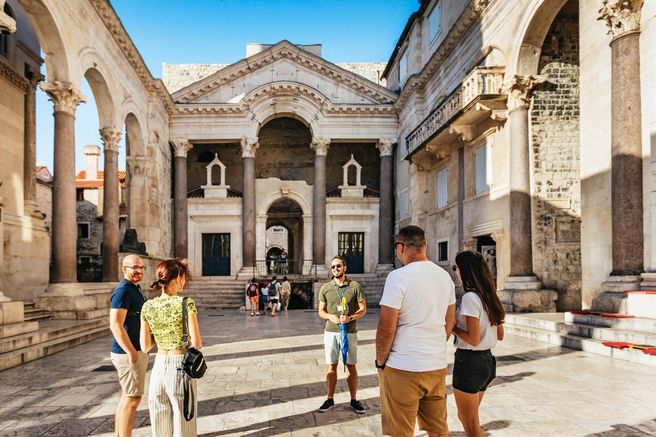
Split Diocletian's Palace & Old Town Small-Group Walking Tour
4.9
59 reviews
US$ 8.44
2026.11.06Directed by Travel Insider Peter
In the old town of Split, Croatia, a palace built by a Roman emperor 1,700 years ago is still an integral part of the city.
Diocletian's Palace, constructed between the late 3rd and early 4th centuries, was inscribed as a UNESCO World Heritage site along with the historic center of Split in 1979. Over centuries, residents built homes and repaired walls within the palace, transforming the emperor's residence into a living neighborhood.
If you're looking to explore Roman ruins and medieval alleys in one go, this is a recommended activity for your first day in Split.
Peristyle Square and the Vestibule: Where the Emperor Was Greeted
Peristyle is the central square of the palace, once a ceremonial stage where the emperor would appear amidst the colonnades of red granite pillars.
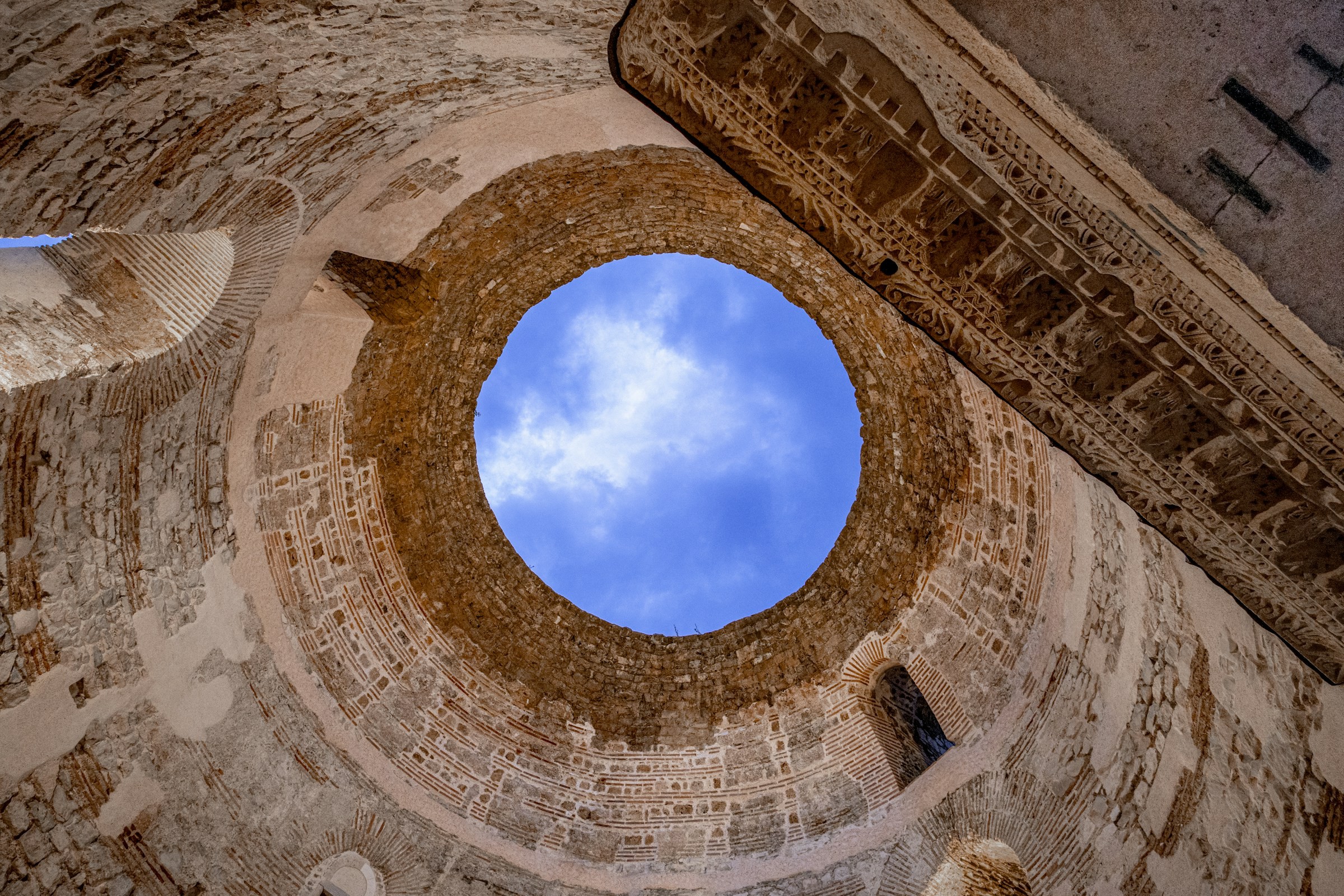
The Vestibule, south of the square, was the circular space leading to the emperor's private quarters. Looking up from inside reveals the blue sky through the central opening of the ceiling.
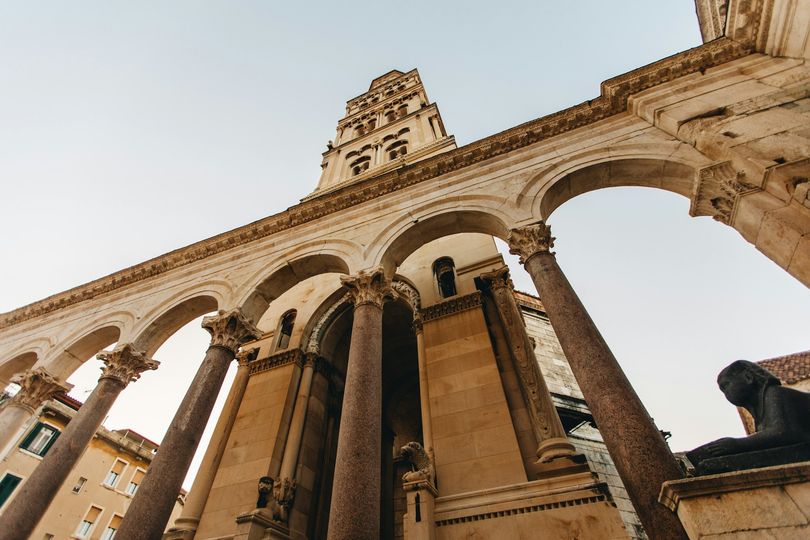
The adjacent Cathedral of St. Domnius, originally the emperor's mausoleum, was converted into a cathedral in the 7th century. Its 57-meter bell tower, construction of which began in the 13th century, can be climbed to the top for panoramic views of Split.
The Palace's Original Design Revealed in the Underground Halls
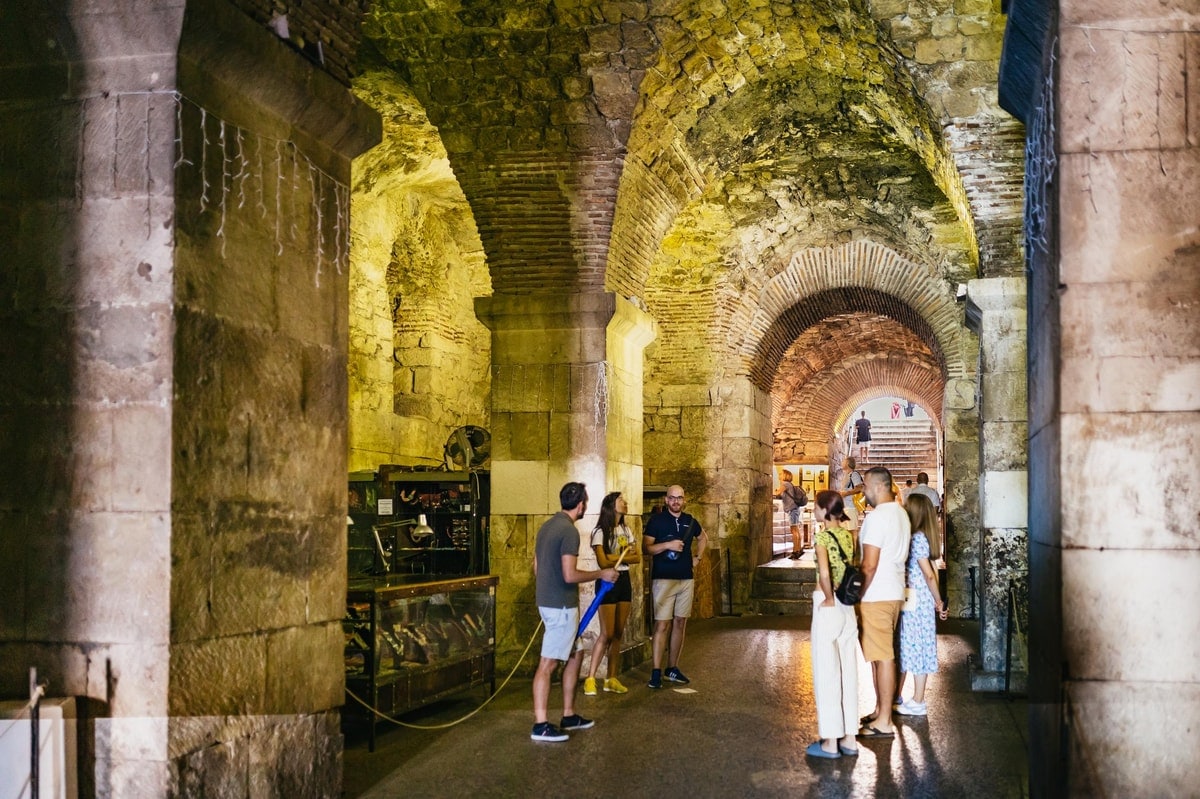
Because the palace was built on a slope, wide halls were constructed below to support the emperor's chambers on the upper levels. These underground halls are considered among the best-preserved examples of ancient architecture of their kind.
The layout of the underground halls closely mirrors that of the upper floor rooms, offering a glimpse into what the emperor's residence might have looked like. The central passage connecting the Riva promenade and Peristyle is lined with souvenir shops.
A Walking Tour of the Old Town Starting from the Golden Gate
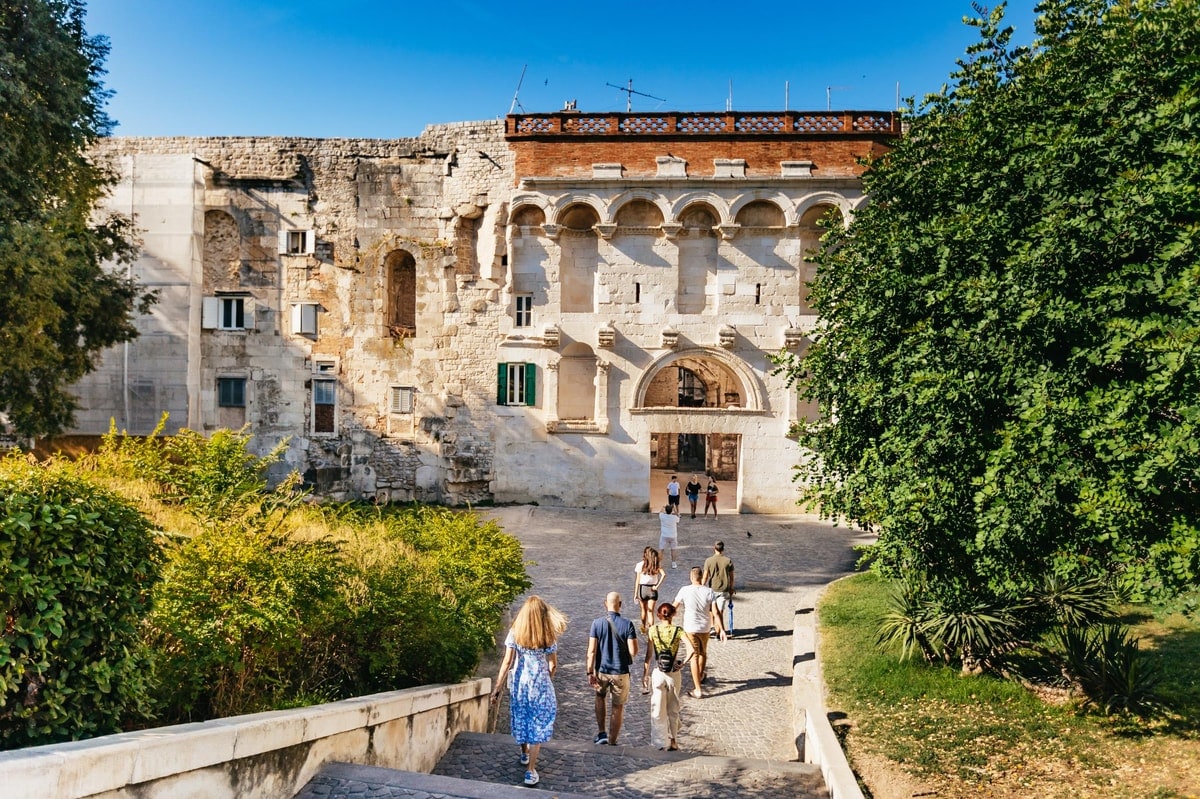
The Golden Gate, the palace's northern entrance, was the gate Diocletian passed through when entering the palace in 305 AD. Guided walking tours with local guides also begin and end here.
The tour covers Peristyle, the Vestibule, the underground halls, and the Cathedral of St. Domnius, and includes stories about Bishop Gregory of Nin. Strolling along the Riva promenade also offers views of Marjan Hill and the Adriatic Sea.
Depending on your choice, you can opt for a 90-minute tour, a 150-minute tour that includes the market and fishing harbor, or a tour extending to Trogir. Hotel pick-up is not included, so please confirm your route to the Golden Gate in advance.
If you're curious about how an emperor's home became a city, take a leisurely walk through Split's old town.


