Lyon City Highlights Walking Tour - Fourvière Basilica & Vieux Lyon & Traboules (90 Minutes / 2 Hours)
5.0
56 reviews
US$ 10.54
2026.11.17Directed by Travel Insider Tony
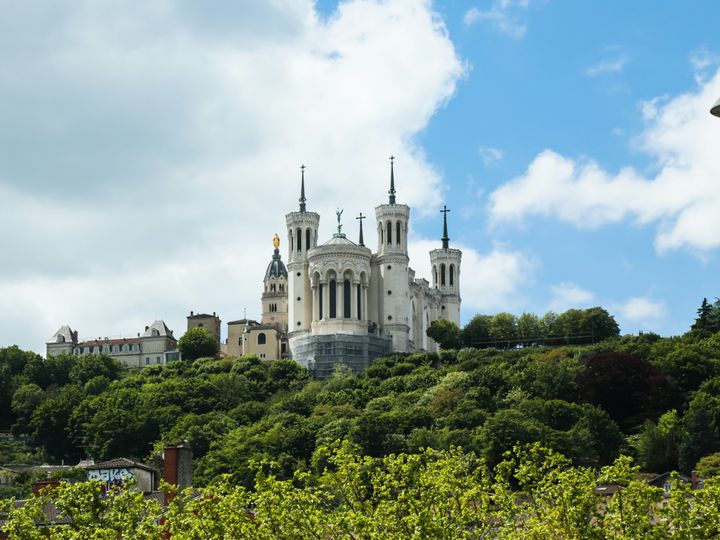
Rising behind Lyon's Old Town (Vieux Lyon), the Fourvière hill is instantly recognizable by the white basilica that stands out from anywhere in the city.
The name Fourvière is said to come from the Latin 'Forum Vetus', meaning 'old forum'. This very hill is where the Romans founded Lugdunum, the precursor to modern-day Lyon, in 43 BC.
With the basilica, Roman ruins and city views all in one place, it's a good first stop for anyone visiting Lyon for the first time. The area has been part of a UNESCO World Heritage site since 1998.
Notre-Dame de Fourvière: A Basilica Adorned with Mosaics
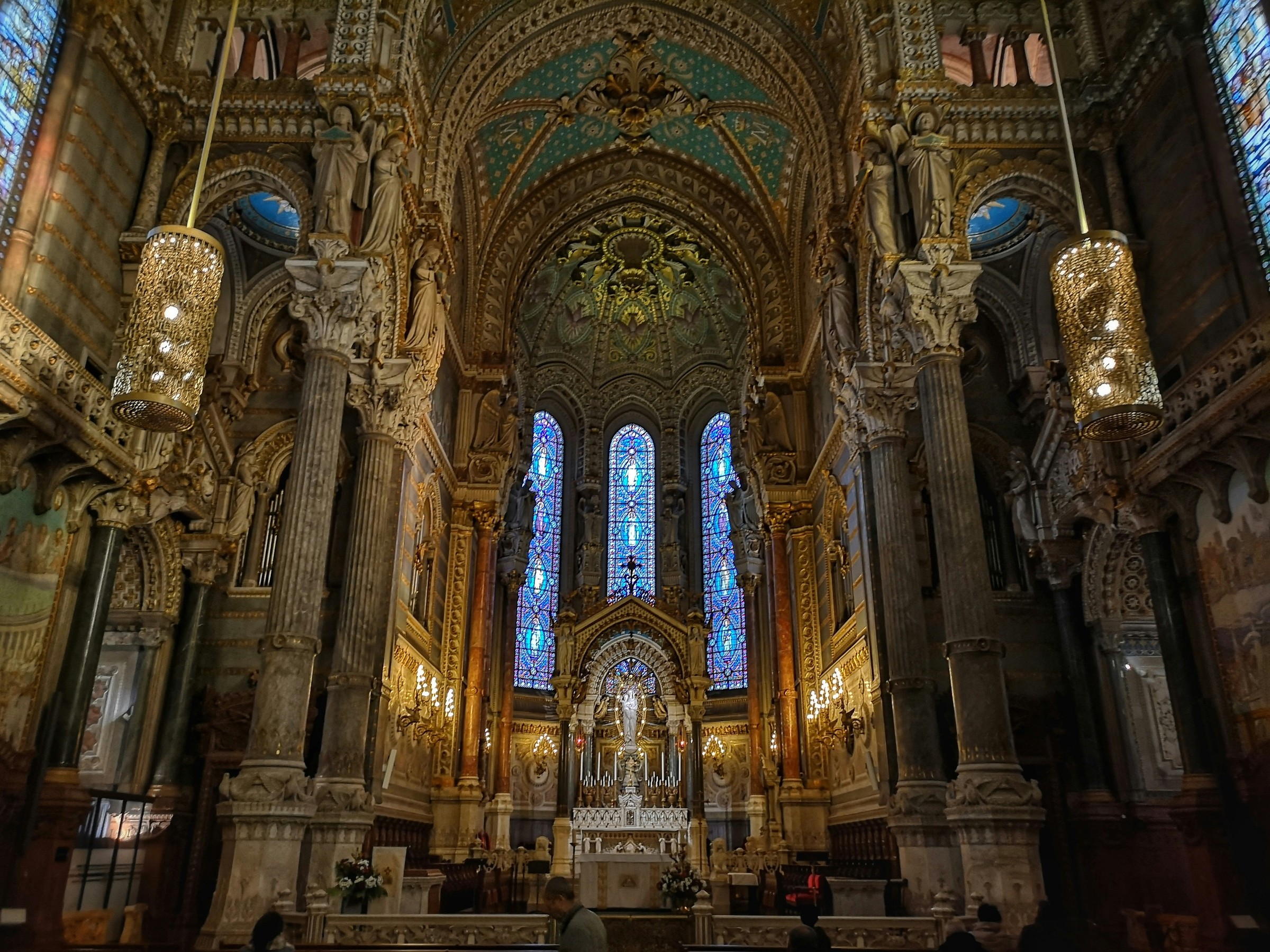
The Notre-Dame de Fourvière Basilica, perched atop the hill, had its foundation stone laid in 1872 and was consecrated in 1896. Designed by Lyon-born architect Pierre Bossan, it's a prime example of Neo-Byzantine style, blending elements of Byzantine, Romanesque, and Gothic architecture.
Step inside, and you'll find mosaics depicting the life of the Virgin Mary and stained-glass windows covering the walls and ceilings. The interior decoration took so long that it was only completed after World War II.
The crypt on the lower level, dedicated to St. Joseph, offers a more serene atmosphere compared to the opulent upper basilica.
The Roman Theatre Left by 2,000-Year-Old Lugdunum
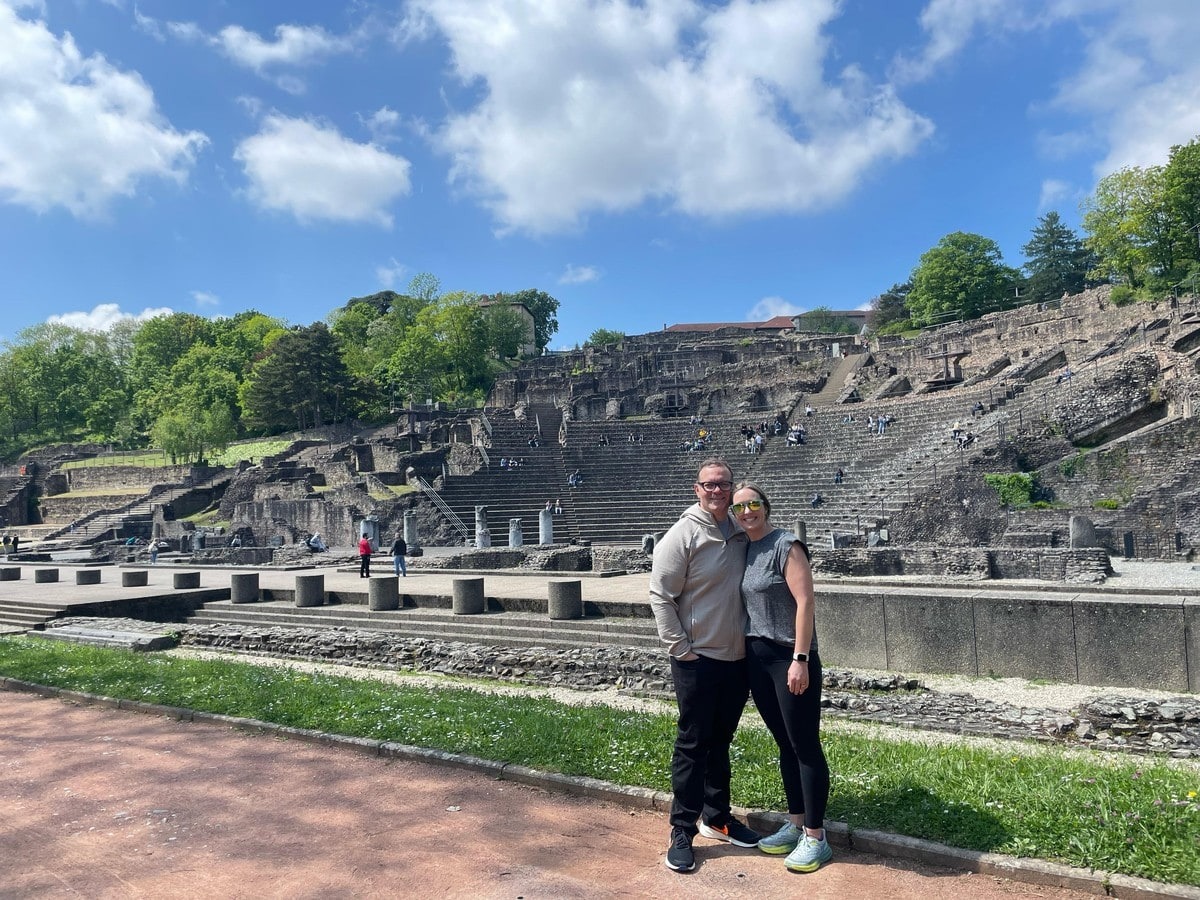
A short walk down from the basilica leads you to the Roman theatre, with its tiered seating built into the hillside. It is the oldest theatre in Roman Gaul and could accommodate up to 10,000 spectators.
Adjacent to it lies a smaller Odeon, primarily used for musical performances. During the summer, these ruins serve as the stage for the 'Nuits de Fourvière' festival.
The Lugdunum Museum, partially buried within the hill, houses artifacts from Lyon's Roman era, including mosaics and sculptures.
A Scenic Hilltop Reached by Funicular and E-bike
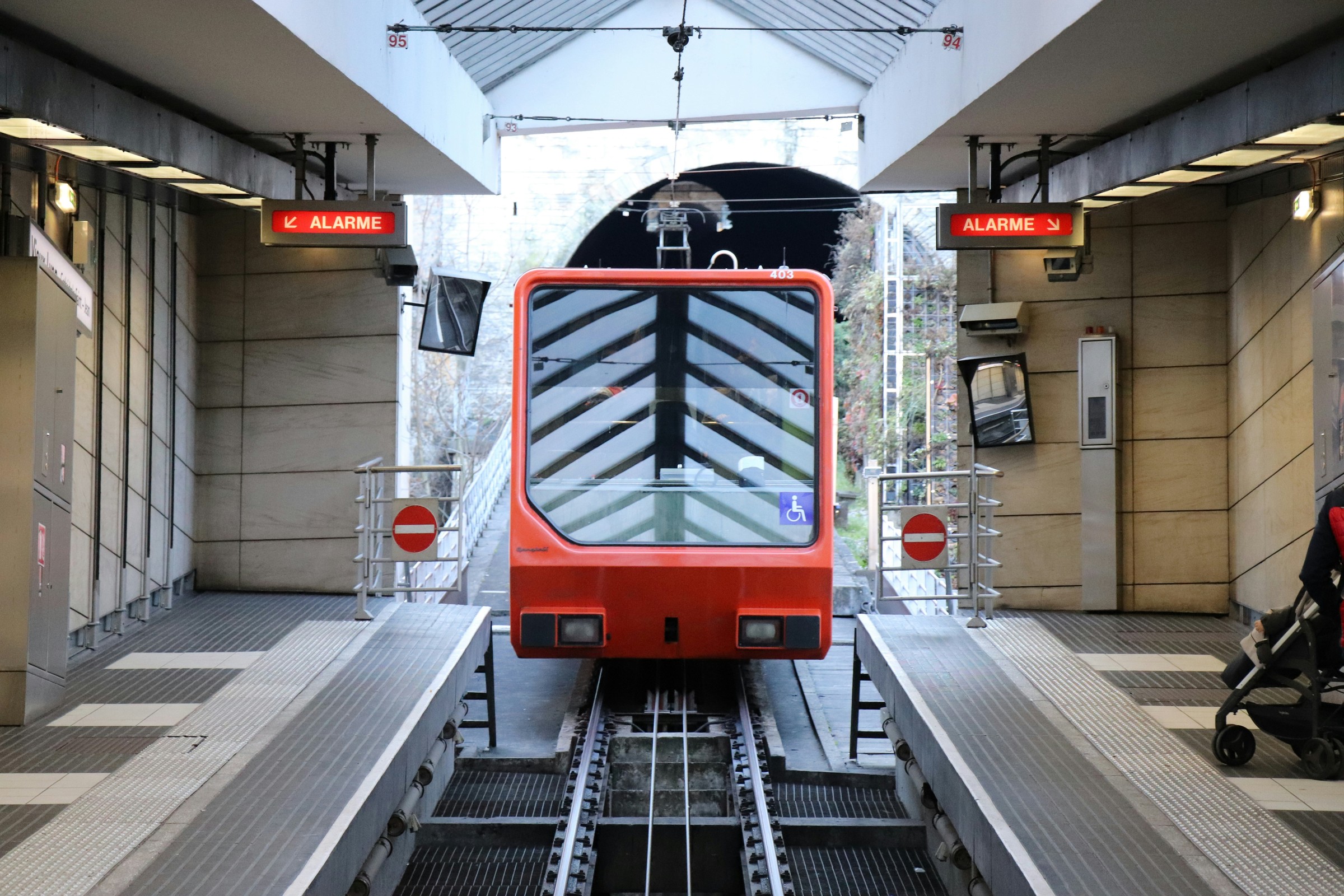
Take the F2 funicular from Vieux Lyon station, and you'll quickly reach the hilltop where the basilica stands. The F1 line runs to Saint-Just via Minimes–Théâtres Romains station, close to the Roman theatre.
From the viewpoint next to the basilica, you get a sweeping panorama of Lyon, including the Cathédrale Saint-Jean-Baptiste, Hôtel-Dieu, the City Hall, and the skyscrapers of La Part-Dieu. On clear days, you might even spot the Alps in the distance.
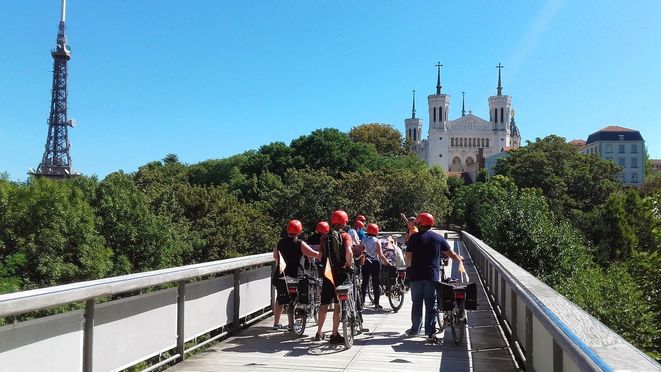
Exploring with a guide is also an option. A 2-hour walking tour covers the basilica and the Roman theatre, then continues on foot to the traboules of Vieux Lyon. A 3-hour e-bike tour offers a more relaxed way to ascend the Fourvière hill, passing through Parc de la Tête d'Or and Croix-Rousse.
Each tour option has different starting points and routes, so be sure to check the details before booking. If you want to overlook the city from the very hill where Lyon began, head up to Fourvière.